
Made to order
25 power cords for Samoa: 230 V 50 Hz mains, no national approval required. Country-plug cords for OEM equipment (the local wall plug to IEC 60320), data center jumpers (IEC 60320) and industrial (IEC 60309) cords from our certification records, with the approvals each one carries.
These country pages are in beta. We are still completing the record of plugs, connectors and cords for each country, so more detail and updates are coming soon.
Cord-set standard: None adopted. Electricity Act 2010 contains no appliance/equipment approval provisions (text searched); AS/NZS 60320.1 / AS/NZS 3191 evidence is the practical benchmark.. Cordage accepted: AS/NZS 3191 flexible cord, H05VV-F (HAR), SJT (UL) — accepted in practice. Labels in English.
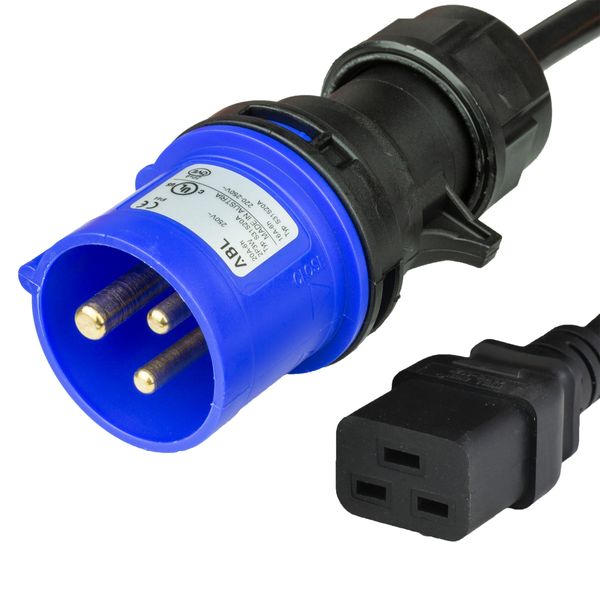
IEC 60309 pin-and-sleeve cords, 16–32 A — the international industrial connector, dual-rated for IEC and North American circuits.
No national approval required in Samoa
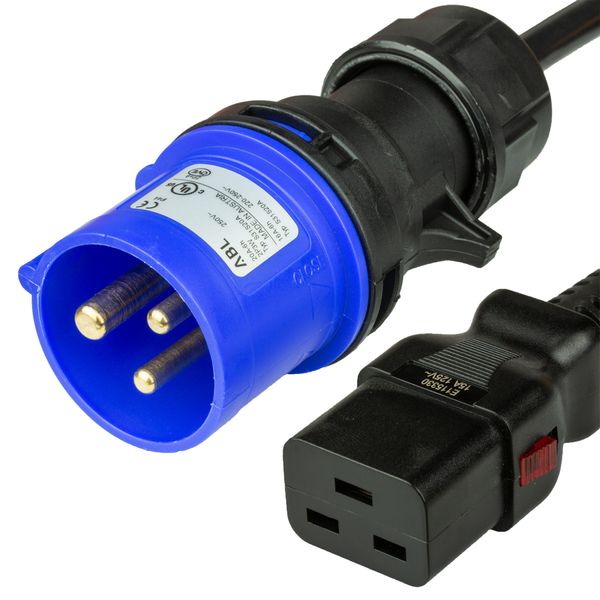
No national approval required in Samoa
Extension cords, splitters, hardwired whips and adapter cords approved for use in Samoa.
No national approval required in Samoa
We list a cord here only when our certification record shows it is approved for use in Samoa or needs no national approval there. Need one of these kinds for Samoa? Ask us — we quote the cord and file the approval.
230 V at 50 Hz. Under the IEC scheme, IEC 60320 C13 / C14 cords are rated 10 A 250 V and C19 / C20 cords 16 A 250 V; a wall-plug cord carries its plug's own rating.
Samoa names no mandatory product approval for a cord set, overseen by Office of the Regulator (OOTR) — Electricity Regulator under the Electricity Act 2010 (also telecom/broadcast/postal); standard export papers apply. A cord marked "Approved for use in Samoa" on this page carries that approval on our record; "No national approval required" means the record names none for that cord type.
AS/NZS 3191 flexible cord, H05VV-F (HAR) and SJT (UL) — accepted in practice. Our international cords use harmonised H05VV-F / H05RN-F cordage; North American cords use SJT / SJTW.
"Approved for use in Samoa" means the cord carries the approval Samoa requires for its type. "No national approval required in Samoa" means Samoa names no national approval for a cord of that type. Need the certificate behind a cord, or a cord for a country not listed? Ask us.